Feeds:
Posts
Comments

In every job search opportunity the topic of remuneration and package always comes out one point or another.  Regardless whether you think you have any negotiation power on what’s on offer or not, you should know what you are worth.  If I were the employer, even if I don’t agree with the number you are proposing, you would still have gained my respect if you present a relevant logic of how you tabulate the number.

Salary surveys, benchmark reports, and insider information are all undoubtedly helpful in assessing how much your fair pay is going to be, but don’t apply yourself in everything you are hearing.  Each person has distinct characteristics and experience to offer and the higher the career ladder you are at, the bigger the variability.  So next time when the so-called headhunters coerce you in accepting an “unbeatable” offer, do your own research and make your own assessment.

What makes you stand out from the other candidates being considered for the same position?  Do you know who are out there and what level of experience they have?  The number one step is to know your competition.  Once you have been in a profession for some years, that should not be as hard to do as it seems.  You should have compared yourself with your colleagues in your own company, those in competitors’ organizations, at business seminars, trainings and cocktail parties.  In my line of work, I particularly pay attention to the personalities of my industry peers other than just their professional qualifications, because sometimes that is what it takes to tell a couple of similarly qualified candidates apart.

The hard qualifiers are easy.  Years of experience, number of subordinates, revenue numbers, savings figures etc. are all quantifiable.  Compare your accomplishments with the market to assess your net worth.  Why is your employer going to be “profitable” to bring you on board?  To drive revenue up?  To land more savings?  To re-energize the team?  Always make sure you will be delivering a much bigger number than what you want on your paycheck.  It’s simple math, and both sides have to win.

Yet it’s the soft qualities that few manage to notice.  Soft qualities like personalities, influencing skills, communication skills, staying power and leadership skills all have unlimited potential that no past accomplishments can truly showcase.  We have seen countless cases where a very competent high performer fails miserably in his new role because he does not have the leadership skills at the next level.  I wrote about that in my earlier post recommending Marshall Goldsmith’s book.   On the other hand, if you are confident that your soft skills are going to add great value to the post at hand, make sure you let your employers and headhunters know about it with examples, and then attach a dollar figure to it.  Yes how one sees this figure as relevant is a subjective issue, but as long as you can put together your logic behind it, there isn’t much to lose.

When negotiation is at stake particularly for a fairly big portion of your career life,  don’t be shy about it.   The key is to be as fact-based as possible, build a convincing proposition and articulate it skillfully.  If you are a good salesman at your job, why wouldn’t you do it for yourself?


Unless you have a clear and straightforward career path, you are likely to run into potential employers of a brand new industry.  I have plenty of experience in this area.  In my career life I have almost never repeated industries in my job moves, and I covered that on my About Me page.  Aside from obvious assessments of a potential new employer’s standing within my particular professional domain, I often need to run some “background checks” of my own.  What is this industry?  How do they rank relative to their competitors in the industry?  Are they performing well?  With help from the internet, while many employers are now Googling their candidates, it is just stupid if I am not doing my share in return.

Regardless of the actual likelihood of staying with any one employer for good, it is still prudent to presume that your next employer is a life-long dependable partner, very much like in the world of relationships.  Hence I also try to validate the long-term viability of the company’s business.  Do they stand a chance in the upcoming one to two decades?  I generally prefer not to take risky odds unless I know full well that my role is going to be consultative and transitional based.

So when IBISWorld identified 10 key industries that will for sure decline even after the economy revives, I was captivated by the title.  According to IBISWorld, “Of these 10 chosen industries, they all generally exhibit one or more of the following detrimental factors…

  • Damaging external competition
  • Advancements in technology
  • Industry stagnation”

For the full March 2011 IBISWorld special report by Toon Van Beeck, click here.

It’s no rocket science really, but I still feel it’s valuable enough to pass it on.  Thanks to Vault.com, who has put together a nice little Top 10 Dying Industries slide show accordingly. 

How many of the following do you think are out-dated or behind the times?  Alternatively, how many of the following are long-gone and you just wish they would make a second coming?  The ony thing I know for sure is that I am hopelessly attracted to people who have good manners, and even though I am hardly the perfect gentleman, I would like to see myself striving to become one.  I like Emily Post’s saying: Manners are a sensitive awareness of the feelings of others.  If you have that awareness, you have good manners, no matter which fork you use.”

Good Old Fashioned Manners

  1. Saying please and thank you
  2. Never intentionally embarrassing another
  3. Never talking only about oneself
  4. Not gossiping
  5. Not prying
  6. Not asking personal questions
  7. Not staring
  8. Not pointing at someone
  9. Dressing appropriately
  10. Not talking loudly
  11. Not asking intrusive personal questions

A list of Good Greeting Manners

  1. Smile
  2. Repeat that person’s name when introduced to you
  3. Remember their name!
  4. Ask How are you?
  5. Answer your questions with positivity
  6. Respect boundaries especially if it is a first time meeting
  7. Say nice to meet you, lovely meeting you.

A list of Good Dining Manners

  1. Sit with good posture
  2. Lay the napkin on your lap
  3. Start eating only when the host has started
  4. If there is no obvious ‘host’, wait for everyone else before you start eating.
  5. Keep your mouth closed when chewing.
  6. Take small bites.
  7. Eat quietly.
  8. Say excuse me when you have to use the restroom
  9. Keep your area clean and tidy.
  10. No double dipping unless you are dining with a culture where all the dishes are shared.

A list of Good Miscellaneous Manners

  1. Sit and walk straight. Maintain good posture at all times.
  2. Laugh, smile, giggle, cry with dignity. Do not make a scene.  Do not slap your knees, jerk forward or roar with your mouth wide open when you laugh or bawl loudly at the sidewalk when you are sad.
  3. Try to make as little noise as possible in all situations. (when you eat, walk, talk, sit, run etc.) No slurping, chewing noisily, crunching, e.g. cracking knuckles.
  4. Mobile Phone Etiquette: Do not be occupied with your phone when with people.
  5. Smile, be interested in the surroundings. ‘Reverse engineer’. Can you imagine Audrey Hepburn looking bored at a dinner party, even though she has attended hundreds?
  6. Dress appropriately. It is generally rude to call a certain attention to yourself. Such as wearing jeans to a wedding, looking sloppy etc.
  7. Speak properly.  Make it habit to pronounce your words and use correct grammar. Refrain from mumbling or speaking too fast. Avoid slang, calling people by their pet names or short forms unless you are close to them. Speak as grammatically correctly as you can.
  8. Never assume anything about anyone.  “She’s so rich, it’ll be okay if I don’t pay her back for lunch.”   “He’s the guy, I should not offer to pay for parking.”   “Someone will take surely give you a lift home.”
  9. Never touch another person’s things or children unless invited to.
  10. To be on the safe side, never talk about money. “How much does it cost?”, “What did you pay for your house?”, “How much do you earn?”, “How much do you make from your business.”,”What is your commission like?” etc.

Dating has definitely turned digital.  The following interview by Kurt Gregory of NBC news sure explains why many says the excitement, mystery and the butterfly feelings at the early stages of dating will soon go extinct.  It’s definitely easier and time-saving, but somehow it’s also quite sad. 

Dining experts say smartphones and social networks are changing the way America dates.

“21% of our surveyors say that they are more likely to ask out a date via text message or e-mail or Facebook versus only 9% who said that in our 2009 survey”, says Tiffany Herklots, Zagat’s Director, Communications.

Zagat’s Dating & Dumping Survey also reveals that like today’s employers, a large number of digital daters do their homework.  52% of Zagat’s surveyors admit to Googling their date before they meet.

Other dos: find your date’s likes and dislikes, food and drink included, and pick a place where you can have both good food, and good conversation.  And, there are the digital don’ts.

“Using their mobile phone or their blackberry at the table, texting and tweeting, is a sure-fire way to turn off your date,” says Herklots.  And if the date and/or relationship just isn’t working, “21% of our surveyors have admitted to breaking up over e-mail.  11% of them have admitted to breaking up via text message”.

Digital dating – helping you to love them or leave them.

Today is April Fool’s day.  To be honest I don’t quite get why the day is invented, or I should just admit that I am not that much of a fun-seeker in seeing other people’s miseries.  Likewise, I also hate to be pranked when I feel that I have been pouring my heart out to those I care about. 

Well there are however exceptions to everything.  I would be more than glad to see the following on today’s news:

  • The entire radiation scare in Japan is nothing but an elaborate drill to initiate awareness of nuclear energy safety;
  • The MTR price hike announcement is nothing but an attempt by the bus companies to attract new passengers;
  • The rains in southern Thailand, the volcanos in Japan, and numerous other weather abnormalities are one big-budgeted media promotion for the latest Hollywood blockbuster titled “It’s Not Even 2012.”

Of course, unfortunately none of the above are joking matters, and my heart goes out to all those who are severely affected in this daunting time.

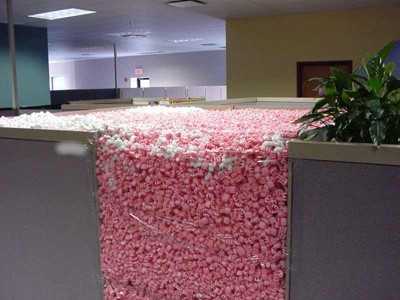
The same goes for pranks in the workplace.  When there are those of us who are taking our jobs way too seriously (actually why shouldn’t we?), anyone who attempts to pull some pranks at the expense of our commitment, time and energy is inexcusable.  In the following examples, the pranksters ended up getting sacked.  So, be warned!

“Pushed to the Limit

Ever work yourself into a frenzy worrying about a deadline? That is exactly what happened when Glenn Howlett’s coworkers sent him a memo saying his big report was due early. The “hint” to Howlett should have been the April 1st date on the memo – unfortunately, Howlett received the news while on vacation and didn’t clue in. He cut his vacation short, gathered up the troops and prepared to get to work. However, as the new deadline approached he worked himself up into a panic and started experiencing heart palpitations. He finally collapsed from stress and had to take a leave of absence. When he finally found out this was all due to an April Fool’s prank, he sued the company, resulting in a company-wide ban on future pranks.

Terror Alert

You can see how this April Fool’s prank started out amusing, especially for two teenage boys. Two 18-year-old coworkers at Westlakes in the U.K. decided to pick up and move another coworker’s car from one parking lot to another. This should have simply ended in some frustration and a few laughs — unfortunately they unintentionally moved the car into a restricted parking lot for a nuclear services industry. This resulted in the nuclear company evacuating its entire staff, fearing a terrorist threat. When the truth came out, the pranksters were arrested for unlawful taking of a vehicle and a bomb hoax, as well as suspended from work.

Fiery Fun

Well, who doesn’t think the potential of lava pouring into your home is funny? This must have been the mindset of Boston’s Channel 7 pranksters when they ended a 1980 news broadcast with a special bulletin: The Great Blue Hill – a 635-foot hill in Milton, MA – had erupted and lava and ashes were raining down from the skies. Supposedly a chain reaction from the then-recent eruption of Mount St. Helen’s, the channel played an audio tape of President Carter and the Governor of Massachusetts declaring the eruption a “serious situation.” Footage was shown of lava pouring down the hill. Once again ill-timed, the reporter ended the segment holding an “April Fool” sign, but not in time to squelch the flood of frantic phone calls from viewers. One man, so convinced, even carried his sick wife to safety. Later that night, embarrassed by the tumult their prank had caused, Channel 7 apologized and the executive producer responsible was fired.”

Get the picture now?  When there is so much stress, tension and suffering in today’s world, we really don’t need another senseless prank in our lives.  Read this on Vault.com for the rest of The Joke’s On You: 7 April Fool’s Pranks That Ended With A Pink Slip.

Have you heard of phytochemicals?  If not, it’s time to pay some attention to this most natural and valuable element on earth.  Phytochemicals help our bodies fight cancer and all kinds of illnesses.  It is a natural element that can only be found from natural foods, like Isoflavones from beans, Lycopene from tomatoes, Allicin from garlic, Indoles from cabbages, and Catechins from green tea.  In the past, nutritionists did not pay much attention to phytochemicals since they are neither minerals nor vitamins that are vital to maintaining the smooth operation of the human body.  However, scientists have since discovered that these colorful natural chemicals provide excellent antioxidation capabilities.  We all know that most illnesses (cancer included) as well as our aging process has a lot to do with oxidation, so phytochemicals provide the much needed and most effective natural remedies for our bodies.

So instead of popping pills and supplements with unknown origins, concentration and doubtful manufacturing processes, getting phytochemicals from the world’s most natural fruits and vegetables is not only safe but also inexpensive.  It may take time and energy to make it a ritual to go to the markets for fresh produce every other day, but it’s a rather small price and effort to pay when health is at stake.

Where are these chemicals located in our fruits and vegetables?  Well they are mostly found under the skin fiber, inside the seeds, pits, stones and stems.  Ironically, these are the parts that we often discard when we prepare fruits and vegetables.  Hence many of us fail to fully benefit from the fruits and vegetables just from the way we consume them.  That’s how high-speed food processors come into play.

And now let the drum roll begins…

15 Most Photochemicals-Enriched Foods

  1. Garlic.  Garlic helps prevent a number of cancer formulations, has high anti-inflammatory effects, and protects the heart.  However over-dosage has its side effects and hence the right dosage per day is roughly 0.125 grams of garlic for every 1 kg of body weight.  A little goes a long way.
  2. Ginger.  Ginger has Curcumin which helps with blood circulation, reduce cholesterol levels, and contains anti-inflammatory effects.
  3. Almond.  Almonds have vitamins A, B17 or Amygdalin, and E, which are proven to prevent cancer and reduce cholesterol levels.  Picking fresh almonds is key however as it oxidizes fairly quickly.
  4. Tomatoes.  My refrigerator favorite.  Lycopene can inhibit cancer cells and boost our natural killer cells.  It is inexpensive, and simply delicious!
  5. Carrots.  Another refrigerator favorite.  It’s nicknamed “ginseng for the poor” because it contains over 490 types of phytochemicals.  We all know that carrots are good for night blindness, coughing, high blood pressure as well as our liver.
  6. Beet Root.  Before I never heard of beet root.  I recall seeing it in salad bars in the school cafeteria when I used to study in the States years ago.  It was cooked and has that amazing red color that is overpowering.  I seldom see it in local markets here at home and almost never heard of anyone incorporating beet root into their diets.  In fact, beet root is considered as the equivalent of Chinese Lingzhi in Europe.  You can just begin to imagine the incredible health value of beet root from that analogy.  They are a rich source of potent antioxidants and nutrients, including magnesium, sodium, potassium and vitamin C, and betaine, which is important for cardiovascular health. It functions by acting with other nutrients to reduce the concentration of homocysteine, a homologue of the naturally occurring amino acid cysteine, which can be harmful to blood vessels and thus contribute to the development of heart disease, stroke, and peripheral vascular disease.  Additionally, several preliminary studies on both rats and humans have shown betaine may protect against liver disease, particularly the build up of fatty deposits in the liver caused by alcohol abuse, protein deficiency, or diabetes, among other causes. The nutrient also helps individuals with hypochlorhydria, a condition causing abnormally low levels of stomach acid, by increasing stomach acidity.  Beetroot juice has been shown to lower blood pressure and thus help prevent cardiovascular problems.   Now, I always make sure I have enough beet root in my fridge.  It’s definitely way cheaper than Lingzhi!
  7. Asparagus.  Particularly beneficial for women who are preparing for pregnancy.  It has high concentration of vitamins A, C, E, as well as the capability to fight many types of cancer.
  8. Celery.  Amazing food to lower blood pressure!
  9. Blueberries.  United States Department of Agriculture (USDA) advises that blueberries are good for cancer prevention and anti-aging.  I remember it used to be quite pricey in this neck of the woods since they used to be imported from United States, but lately I see a lot of cheaper options originated from Chile.  Not bad.
  10. Cherries.  Prevents cancer, heart disease, Parkinson’s disease, aging, inflammation, eye fatigue, insomnia…the list goes on.
  11. Strawberries.  Great fruit to fight cancer, but it’s not in my daily diet since it is still relatively pricey.
  12. Wolfberry, or Lycium Barbarum.  We almost always see them in dried reddish form and we Chinese always put them in soups and desserts.  When Chinese Emperor Qin (221 BC) ordered his people to look for the “prescription of eternal life”, the few rumored prescriptions that are countered for today ALL contain wolfberries as a critical ingredient.  It’s good for our eyes, skin, immune system, liver and kidney.  I don’t think it will give me eternal life (and not that I ever want that really), but I won’t say no to healthier skin!
  13. Cranberries.  Known for its effect on urinary infections.  Relatively more rare and expensive here, and imported concentrated juices can be rather costly too.
  14. Linseed or Flax seed.  Can be found in most organic health food stores.  It contains Omega-3, Omega-6 and Omega-9.  It prevents heart disease and cancer, lowers cholesterol, blood sugar, degradation of the brain, and prevents hair loss, sight degradation and dry skin.  I have not yet tried this, and it just seems that I’ve been missing out.
  15. Sesame.  We Chinese are known to prepare creamy black sesame puree as desserts, though in the last decade or two its role on the dining table  has been largely replaced by ice cream, fancy cakes and puddings.  It does incredible wonders to our skin and helps delay the aging process.

There you have it.  Don’t over-stress yourself to find all 15, instead just go for the ones that are easy to get, in season and affordable.  Nevertheless most of these foods are low-priced relative to the so-called bottled supplements in health food stores, without the unknown side effects and artificial addictives.   If taking these foods can improve your health and energy PLUS offering the sense of fullness to your stomach, I really don’t see how one won’t be able to lose weight while feeling great, at the same time. 

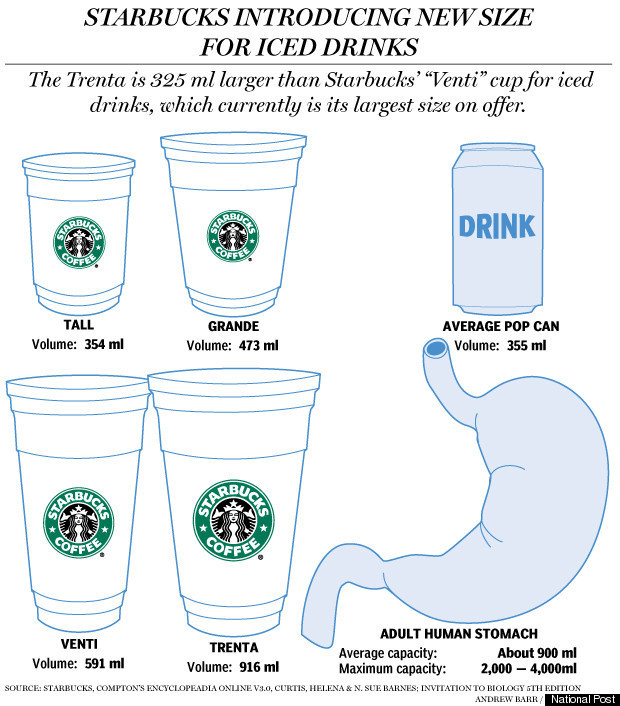
Aside from sit-down restaurants, the most patronized F&B outlet in town for me is Starbucks or Pacific Coffee.  No I don’t really go for the caffeine kick or the taste of freshly ground coffee beans, and quite frankly I don’t find the quality of these coffee chains any appealing either.  I visit their outlets when I need a place to rest my feet, stay sober from the crazy pedestrians on the world’s most crowded streets, and to kill time in between appointments around the city.  In Hong Kong where a 500 square feet jewellery store in Causeway Bay was reportedly rented for HK$1.4 million per month, or the new to-be-opened Apple store is spending US$20 million on fit-out in Central’s IFC mall, a HK$33 venti cappuccino feels like a bargain for a 2-hour refuge in the midst of all that madness.


There is a lot to be studied under the Starbucks logo.  Economists use Starbucks’ pricing of different sized drinks to explain costing theories.  Psychologists will tell you how that each order can be customized provides the one final shred of perceived control that each patron gets to salvage in today’s helpless world.  Nutritionists question the high calorie content of its Frappucinos (and plenty more), though Starbucks fearlessly rolled out its Trenta-sized iced products that are 30% larger than Venti.  At 916 mL, the Trenta is actually larger than the average capacity of the adult human stomach (900mL).

So what are The Top 10 Things You don’t Want To Hear From A Guy At Starbucks?  Here is David Letterman’s answer.

10.”We ran out of coffee filters, so I’m using one of my old undershirts.”

9.”Try our triple cappuccino — It’s a legal alternative to crack.”

8.”Let me make sure that’s not too hot.”
 
7.”You know, I licked every one of these stirrers.”
 
6.”One Decaf Venti Skim Latte — 39 US dollars.”
 
5.”Sugar with that?”
 
4.”Grande Caramel Macchaito? Talk English!”
 
3.”If I catch any of you people going into a Dunkin’ Donuts for coffee, I’ll break your legs!”
 
2.”Some whipped cream for you… and some whipped cream for me.”
 
1.”After work, I’m gonna pick up a hooker-uccino.”

I had no idea that some kids end up feeling even worse after seeing Facebook updates of their happy looking friends having a good time.  Apparently it’s called “Facebook Depression”.  Right, those status updates are so “in-your-face” and more often than not, bragging the hell out of oneself, as I covered earlier on my advice for these people.  Dr. Gwenn O’Keeffe, a Boston-area pediatrician and lead author of new American Academy of Pediatrics social media guidelines, said that “…it can be more painful than sitting alone in a crowded school cafeteria or other real-life encounters that can make kids feel down, because Facebook provides a skewed view of what’s really going on. Online, there’s no way to see facial expressions or read body language that provide context.”

No doubt Facebook can be a popularity contest for those who aspire to be followed or idolized, regardless of what age they are at.  I choose to play no part of that.  I use Facebook to let my friends know whenever a blog post is published, and I leave it at that.  I believe some may find it annoying if they don’t find my posts relevant to their liking, and they might have hid my updates using the site’s privacy settings.  For those who are tolerant enough to leave me unhid, I choose not to add to their burden by planting self-promoting catch-phrases on each update like some people I know.  I choose to let my friends and readers decide whether my posts are crap or inspiring, and I am not going to rob them out of their freedom to make their own judgements. 

Well, if it’s a commercial establishment then it’s another story.  However, Facebook is Facebook.  I would like to see it remain as a social networking platform, at least on my news feed page.

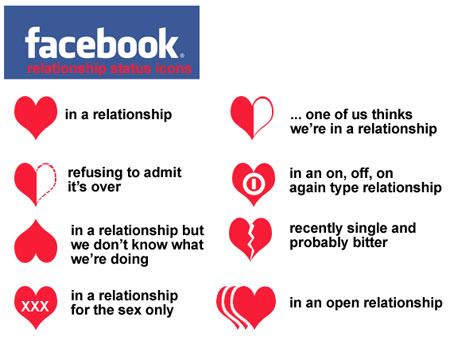
The other form of “Facebook Depression” lies with relationship matters.  I come across this Top 10 Facebook Etiquette Rules on Relationships from yourtango.com which is just too hilarious not to share.

  1. Relationship status is a mutual decision.
  2. It’s OK to look through your friend’s friends for people you might want to meet/ date/ friend. It’s not OK to skip the middleman on the introduction.
  3. Ask first before friending a close friend’s ex-squeeze.
  4. It’s OK to remain friends with someone you used to date on Facebook.
  5. Posting a ton of pictures, videos and comments regarding a recent, failed relationship is a bad idea.
  6. As with all things, there is such thing as too much information.
  7. This is sort of an addendum to 2 previous rules, but it bears its own space: don’t friend an ex’s new squeeze if you’re not actually friends.
  8. Know the difference between the Wall and a message.
  9. Again, the interweb is not a therapy session and shouldn’t be used with severely impaired judgment.
  10. Above all other rules (in this actually is in the Facebook rules), do not create a fake page as a way to punish an ex.

Don’t you just love this?  For the complete write-up with clarifications and examples (if you ever need anything more really), check this out.

Happy Facebooking, and don’t end up making yourself look laughable or pityful, please.


I’m sure you have experienced some form of heart wrenching moments in your life, and though it might not necessarily be your greatest moments, they are still worth remembering.  Obviously I have experienced my fair share, and to be honest I do try my very best to see the silver lining of every one of them.  I won’t agree that this is self-deceiving, as I believe withering away in my own demise isn’t something I am thrilled about.

Sometimes listening to the signs of your body is pretty amazing.  When I feel that the left side of my chest (aka my heart) starts to grip slowly sending sour emotional notes up my brain, I know I have gone into areas that matter.  You know sometimes we are lost as to what we are fighting for and what’s it all about in life, just because we tend to follow paths where they are all decided for us.  It’s these late night heart wrenching moments which remind me that I am alive and human, and my organic human needs lie with my family, my relationships and my beliefs.

A few lines from Yahoo’s associated content:

“Sorrow is usually accompanied by tears and much pain. The pain from sorrow is definitely more acute than physical pain because it is something which cannot be alleviated by medicine. Some people have described the pain sadness as the breaking of the heart.”

” Although sorrow is something unavoidable, we must also learn how to deal with it so that it does not develop into manic depression. The only way to deal effectively with sorrow is to come to terms with the loss which triggered it. Accepting that what has happened cannot be altered and coping with life thereafter is the best way to combat depression. Although it is not a fool-proof cure, because the memories remain; carrying on with life is the best possible antidote. For the inexplicable sorrow which is triggered from innocuous events, it should not be allowed to overwhelm us so much that we lose self-control and sink into despair.”

Amanda Harvey has the following to say on her life-coaching portal:

“To feel the pain, is to stop fighting the nature of reality. In Buddhism it is said that pain or sorrow is as much a part of our life as joy. The difference that we can bring to the pain that we experience is whether or not we allow it to cause us suffering.

Very few people want to feel pain. It is not nice or pleasant, but it is inevitable. Whether our pain brings suffering to our lives is largely dependent on how we handle it. Suffering is always caused by a conflict between what we believe reality should be, and what reality actually is. Fighting against reality does not change what is happening in our lives, but rather, it intensifies and distorts the pain of difficult experiences.

By allowing ourselves to feel, rather than fight the sorrow of life’s tough times, we can move through the pain much faster, and experience it as a pure sensation rather than an inner turmoil. Fear of feeling pain is almost always worse than the pain itself, and giving into the pain can actually lessen its intensity.

If you are going to experience sorrow, as part of the human experience, why complicate the issue with resistance, fear, and suppression? By allowing yourself to feel the pain when it comes, you also open your heart to making a quick recovery, and to being able to fully experience the joy that will also come, as surely as night follows day.”

Right on.  The keyword for me is allowing ourselves to feel rather than combating sorrow full frontal.  Feel it, live it, accept it and move on from it.

Tweeting is hugely popular in the States and somehow the version here in Hong Kong is named “Weibo” (literally translated as microblog) which gains its popularity through Chinese “tweets” by celebrities in the region (for those  who are interested in the difference between Sina Weibo and Twitter, read this).   Whether it is in the form of tweets or Facebook updates, there is no turning back once an update is posted.  Never underestimate the effect of a post especially if you are one of the opinion shakers in the community. 

So when I see the following slideshow on the top 10 Twitter firings and fallouts, I cannot believe how the movers and shakers could have been so careless.  If they have listened to US President Obama’s advice that “…whatever you do [when posting on Facebook] , it will be pulled up later in your life…“, they wouldn’t be at where they are today.