Feeds:
Posts
Comments

I came across an excellent article on CPO Agenda written by Tom Lawrence, strategy director at European procurement specialist buying team.  Those of you who have read my earliest posts on procurement branding will understand my frustrations and aspirations of my profession.  If you are keen in hearing another person’s views, I have taken the liberty to honor Mr. Lawrence’s work by copying his article here.  I will read it again and again as it echoes my views and vision exactly.  For those of you in my profession who would like to get in touch with Mr. Lawrence and his consultancy, please feel free to visit his company’s website.  The bold formatting is done by myself in highlighting the parts that resonate with me most.


What’s In A Name?    By Tom Lawrence
 
“The profile of indirect spend has grown considerably in recent years, but it is currently receiving more attention than ever before. There are two principal factors behind this rise.

Businesses are struggling to grow their top-line revenues. While forecasts do predict growth, this is weighted heavily towards 2013 and beyond. The outlook for the next two years is very sluggish. Therefore, to increase shareholder value, organisations are focusing on the bottom line, and on cost management.

Procurement is making headlines. Three recent government reports – Sir Philip Green’s efficiency review, the Strategic Defence and Security Review and the Comprehensive Spending Review – have turned the spotlight firmly on procurement and the consequences of not managing it effectively.

Procurement has come a long way in the past 20 years. However, the journey is far from complete. The renewed focus presents us with an opportunity to redefine procurement as a key strategic support function at the very heart of business. Yet indirect procurement’s value is frequently misunderstood, and this ambiguity leads to business leaders undervaluing it.

There are several fundamental questions which, as a profession, procurement simply does not provide consistent answers to. If we are unable to clarify these issues ourselves, it’s no wonder ambiguity occurs elsewhere.

It’s all in the name. First, perhaps surprisingly, is the terminology that we use – indirects, overheads, goods not for resale (GNFR), and non-core. All these words are both negative and imprecise. Indirects are simply the opposite of directs. The same goes for non-core and core, GNFR and GFR. Using only negative terms immediately relegates them to the second division, where they are perceived as secondary and unimportant, if not irrelevant, when in fact the complete opposite is true. Procurement is crucial. Without it, an organisation simply cannot function.

We need to shift fundamental perceptions, replacing the perception of procurement as a cost to one where it is valued as a business-essential activity. And it might be time to adopt a new name for this activity – one that reflects its importance and which will help to change mindsets. At buyingTeam, we have been using the term ‘Enabling Spend’ for several months.

If you look at text books or read market research to answer the question ‘what is procurement?’, you will find much around the source-to-pay process (eg, supplier relationship management, contract management, strategic and tactical sourcing, spend analysis, etc.). All of which is true and accurate. But business engagement – a key ingredient for successful procurement and an essential catalyst, in fact – is almost completely ignored. Procurement’s potential is released when it looks not only outwards to the supplier community, but at its own organisation, acting as an internal consultant or analyst, challenging and influencing behaviours, business rules and ways of working.

Beyond an almost cursory acknowledgement of the need for change management, business engagement is ignored by most textbooks and research and, to be quite frank, by many procurement functions. Procurement will only ever be viewed as a function to secure the best deal if that is all it focuses on, or all that it is tasked to achieve.

There is no common or industry-wide understanding of the areas that make up Enabling Spend. In some organisations, professional services such as audit fees or bank charges, for example, fall outside the remit of procurement. In almost all of the organisations we work with, there are areas of spend over which procurement has little influence, and these can include large spend marketing and IT.

The function may be engaged by the business to negotiate a deal, but all too frequently buyers are not trusted with any further involvement. The root cause of this attitude is the ongoing lack of understanding, even among the CFO community, of how procurement’s principles should be applied to all areas of spend. This is a missed opportunity.

What works for direct procurement doesn’t necessarily work for Enabling Spend. Enabling Spend contains hundreds of diverse categories, with thousands of suppliers serving a very wide range of stakeholders, all of whom have different needs. In comparison, directs has far fewer areas of expertise, suppliers and stakeholders. So a totally different approach is needed – yet many organisations apply their directs approach to Enabling Spend.

The range and depth of skill sets that Enabling Spend requires, – such as commerciality, change management, communication, procurement and deep category knowledge – are vast. ‘Best in class’ is a misleading concept. What is right for one organisation is not necessarily right for another. Procurement must be tailored according to an individual organisation’s culture, structure, profile and strategic aims to deliver the best results. Rather than ‘best in class’, a more useful question to ask is: “What do I need?”

Which brings us to procurement outsourcing. Even here there is confusion. Procurement outsourcing has come to mean different things. To many people, it involves shifting work wholesale to low-cost countries using technology and streamlining processes, running the same processes for less money. It’s all about efficiency. Yet true procurement outsourcing – and where multiples of the value achievable through efficiency are possible – is about how to do procurement better. The benefits are all about effectiveness.

Given all the above, it should come as no surprise that business leaders remain unaware of what is achievable by getting this right, and are therefore failing to prioritise it above other initiatives.

Finally, organisations are simply not investing enough in the management of their Enabling Spend. This is certainly preventing large elements of the above from improving, and is possibly the root cause of much of it. In our experience, procurement can and should be generating a return on investment of between 8 and 15 times. This is a huge benefit and one that substantially outperforms the ROI generated by most other investment decisions. Moreover, it goes straight to the bottom line. We see time and time again that the opportunities to improve shareholder value and operational performance are great – and way beyond the expectations of the senior executives.

The value that most procurement functions deliver is simply not good enough. Yes, much of this is due to the lack of investment in procurement. Yet we, as a community, must shoulder our fair share of the blame.

If procurement is to take its rightful place as a key strategic support function and be recognised as one, it’s time for us to address some of these fundamental issues. In doing so, we can continue to push procurement to front-of-business leaders’ minds as a powerful strategic asset that can deliver real business improvements.

The time has come for us to raise our game and, in doing so, release procurement’s true potential.”

If you have read my earlier posts, you will remember that I have written about delivering solid ROIs to my employers (my commitment is 7 times and up, comparing to Mr. Lawrence’s 8 to 15 times), as well as constantly expanding our span of involvement to areas of above-the-line marketing, consulting, sponsorship and professional services so as to further maximize the author’s definition of “Enabling Spend”.  If you are interested in joining my (and Tom’s) vision of “raising our game”, I am more than happy to hear from you!

I read from the vault guide that there are now actual internship applications with candidates listing “excellent Facebooker” and “highly skilled Tweeter” on their resumes.  Apparently the ability to connect with thousands of Facebook friends is an accomplishment, and I take my hat off to them. 

But seriously?  What are they thinking?

Hold that thought.   Continuing on from my thoughts yesterday, when today’s post-80s, or Generation Y, are ready for more senior roles in the corporate world, the scene may be totally different.  While social networking skills may not be something worth bragging about now, a few years later the absence of such will be considered fatal disqualifiers for Generation Y hiring managers.

Social media usage will only grow further with younger generations as they mature, contrary to some beliefs that they will grow out of such sites.  With the increasing leverage of social media sites for corporate advertising, loyalty programs, public awareness and even hiring, the next time we try to shrug our shoulders reading those social networking attributes, let’s get real for a second and think again.

“Post-80s” (generation born after 1980) or “post-90s” continues to be a popular topic in the media lately.  According to a local paper, many corporations are seeing post-80s employees as one of their top human resource challenges these days.  Apparently there are now training courses organized for managerial staff to understand and interact properly with our next generation of workforce. 

The human resource consulting firm being interviewed reports the top 9 characteristics of post-80s workforce:

  • Poor concentration
  • Poor reading skills
  • Impatient
  • Difficult to communicate
  • Overly confident
  • Poor punctuality
  • Poor personal conduct
  • Irresponsible and poor accountability
  • Overly temperamental

Though I am sure there is a bunch of people who are guilty with such characteristics, it’s also time for employers to start adapting their managerial style according to the times.  Many younger recruits are not used to listening to orders because of their unique ways of being brought up.  Family sizes are smaller, there are fewer siblings, and many of them are used to being pampered by all material and financial means.  The new generation is often confident in their own ways, and they are raised to question authority at all times.  Managers who still stick with announcing orders without rationalization are only asking for trouble.  A new managerial style has to be adapted, and the first step to do is to learn how to embrace the new generation of workforce.

What are the new rules?  I am no expert, but off the top of my head I can come up with a few.

  • Don’t be condescending.  Attitude is important, and it should be a two-way street.  Assuming rightaway the post-80s is a group of whining needy kids will only add to the tension.  Don’t talk down to them, and don’t use phrases like “You know how lucky you guys are?  Back in the days, I wished that someone would have spent the time to teach me like I am doing for you right now!”
  • Get rid of the “Because I told you!”  The new generation needs to be convinced through lots of questions and answers.  Their new thinking may spark new solutions which is well worth the added time invested. 
  • Be patient.   Like raising kids, sometimes you have to let them make their own mistakes.  I know it is definitely costly for corporations to allow their staff to make mistakes, but think about it, his other departmental colleagues or external clients are of his generation as well.  What we view as mistakes now may be a norm in the new era.
  • Focus on results rather than the process.  Since the process is going to be challenged anyway, why not allow them to make up some rules themselves?  However, the new rules still have to be socially accepted by others, meaning no one can skip work claiming they are “working from home”.
  • Nurturing.  I know, the workplace is meant for business, but if we understand the social reality of the new generation, managers nowadays also need to be the psychological coach of new recruits.  There is no guarantee that the new joiners will prove to be a valuable asset to the company, but not spending the time to teach them responsibility and accountability, for example, will only lead to disastrous results.  Set the expectation low, and there is no harm to overly communicate. 
  • Positive reinforcement.  When staff feels that they are being rewarded or acknowledged of an accomplishment, the motivation is often so strong that a momentum will be created.  Don’t be stingy with the compliments, be humble and take advantage of their creative juices and unorthodox thinking.

All in all, bitching alone will never bring any solution.  We should all face the reality and ask ourselves what is something we can do to bridge the gap.  After all, who says the negative qualities are possessed only by the post-80s?  Aren’t you equally mad at that other colleague of yours who have been around forever and unwilling to accept any new ideas?

Let’s make sure we do not turn into those we used to despise, period.

Back in the years, one of the earlier lessons I learned as a consultant was how to manage our clients’ expectations.  Our client projects were mostly related to e-sourcing events with an estimated savings figure in mind.  We wanted to ensure our clients a handsome return of investment.   Yet there could still be a number of uncontrollable factors that could go either ways.  The suppliers could be colluding, the parts for bid could turn out to be obsolete, or our clients’ credibility was not as high as they would believe themselves.  The golden rule for all engagement managers therefore is to manage our clients’ expectations on a daily basis until the project finishes.

In short, managing expectations is to minimize the impact of surprises, particularly those unpleasant ones.  It requires the ability to think of all the possible scenarios that could go wrong.  I have since learned to extend this cardinal rule to my daily life, and so far this rule has not been disappointing me a single bit.

  • Investments.  I am definitely not one of those daring investors who would bank their entire net worth into a property, stock or a fund.  My lowest expectation in buying my apartment is that I can see myself living in it till the day I die.  If I can flip it and make a profit some time, it will always be a bonus.  Of course I will carefully pick properties with higher appreciation prospects, but expecting any solid return within a specified period of time is not my number one priority.
  • Entertainment.  I have been around the city long enough to know what to expect from the hundreds of thousands of restaurants, theatres, shopping malls, boutiques and bars.  As they all differ by the clientele they serve, level of customer service standard they uphold, and the dollar amount on their price tags, I set vastly different expectations just for that.  This way I know exactly what I will be getting.  If I am in an adventurous and energetic mood, I don’t mind going for crowded eateries that my bowl will be lifted away as soon as I put down my chopsticks.  If I am exhausted after a day’s work, I will go for more comfortable places where I expect pampering service and cuisine, with full expectation that the bill is going to be more pricey.  Why some people choose to swap that around always puzzles me. 
  • Relationships.  One of the reasons why many couples get into fights on Valentine’s Day is expectations mis-alignment.  Some wish for romantic elements, while some choose to be more practical.  Some feel the pressure from their peers and colleagues, and there are a million different expectations of gift choices, dining choices, and what to do afterwards.  This aspect perhaps is the least manageable in my opinion, since no matter how prepared and civilized it is with the prior planning and conversations, one always secretly wishes something more.
  • Career.  This requires no further clarification.  Everyone is dispensable, whether we like it or not.  Every decision we make or advice we provide comes with both opportunities and risks.  If we have not fully contemplated all possible outcomes, we would surely be struck by surprise.   Another thing for sure, is to manage your superior’s expectations on yourself.  He or she also hates surprises!

I know some may see this is all too conservative and behind the times.  Some believe that the society needs constant challenges to the status quo, and they are always ready to make bold objectives and changes.  I see nothing wrong with that, since deciding which path to take solely depends on how well you know about yourself.    Being honest to yourself and listening to your heart is critical. 

There is one thing that I never attempt to manage expectations whatsoever, and that is my Love towards my family and companions.  My devoted love and affection is unconditional.   Just like what the book Eat, Pray, Love says, love is worth losing balance for.


There was an interview of a 26 year-old Mr. Leung on a local newspaper two days ago that has created a heated sensation in the city.  Mr. Leung has a graduate degree from the Chinese University of Hong Kong, though his qualifications haven’t brought him any luck in the job front for the past two years.  On the news video, you can see Mr. Leung describing himself as a victim who is oppressed by society and discriminated by employers because of his lack of work experience and overqualified CV. 

The news story failed to draw sympathies from anyone, except today’s paper posted a follow-up story about a local restaurant offering Mr. Leung a position waiting tables.  Leung’s response was: “I am having three or four offers now and I would like to think about it for a few days before responding.”

Well, nothing wrong with that, but not after painting a sob story in front of millions of onlookers in the city.

My verdict?  It will be a few more years before Mr. Leung finds a stable job, I’m sad to say.

  • Attitude.  With tens of thousands of fresh graduates coming out every year with similar background, why Mr. Leung thinks jobs would be handed to him on a silver platter is beyond me.  He thinks his qualifications are being looked down upon by the employers.  I will be too, and it’s not about the certificate he is holding.  I am just questioning how he got to graduate in the first place with such poor critical thinking skills.
  • Presence.  Unmanaged hair, poor posture, stunted speech, lack of eye contact… are just a few physical traits anyone can witness from the news video.  Again, this has nothing to do with him being a grad school graduate.  Mr. Leung claimed that McDonald’s rejected him because he was overqualified, though I bet no fast food chain would have hired someone with an obvious challenge in human interaction.
  • Rationale.  Without reflecting on himself, Leung believes his pain and ordeal is inflicted by the Hong Kong government.  He claims that Hong Kong’s spoon-fed education system creates graduates with less than adequate socializing skills.  That is just a slap on the face to all the other teenagers.  If Mr. Leung has so successfully completed his studies with flying colors, what will he say to the hard-working kids who cannot even afford the tuition to complete their studies in the first place? 
  • Tactic.  I cannot imagine a grad school graduate attacking the job market with a total loss of focus.  Interviewing for 200 jobs?  It’s not how eager or how many posts one would go for that proves dertermination.  It’s about building a compelling case in front of the employers how our distinctive qualifications, personality and mindset can bring to the posts.  There should be at least a drawn path of application.  Leung might have done it, but from the short abrupt answers he provided for the employment agency representative, I am hardly convinced.

This, is scarier than the horror movie I watched last night.

The Cantonese video coverage of the story can be found here.  Part 1   Part 2

Recruitment videos not only serve as compelling tools to attract potential employees, they are also classic corporate advertising videos for generations to come and enjoy.  I invite you to sample a few memorable recruitment videos that will give you inspirations of what key elements should be incorporated in order to capture the audience. 

  • “It Was A Happy Day” is a joyous recruitment video put together by Ernst & Young in 2001.  It is so memorable that it is one of the most talked about corporate videos ever.

  • It’s a grueling 9-minute video by Southwest Airlines, appropriately titled “Just Plain Fun”.  Be warned, the video is hypnotizing!  By the way, the administrative purchasing portrayal is just embarrassing.

  • I simply do not understand why the Taiwanese armed forces would need to recruit when they already have transformers on their force!

  • Ok I just cannot resist to include this ad for the Japanese navy.   You be the judge, and tell me what you think.

  • This is a college recruitment video instead, for Appalachian State University in 2005 (!!!!).  Seriously, they couldn’t come up with anything more sophisticated than “Hot, Hot, Hot” ?  There are subtitles and you can find it in all karaoke boxes in town.  Sing along!

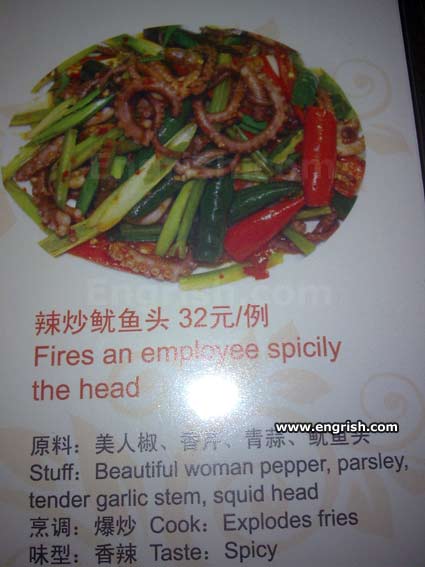
Whenever I feel like I need a good laugh, there are some sites which I will definitely turn to.  Well I never meant to laugh at anyone whose English is their second language (myself included), but you just need to enjoy the occasional laughter derived through huge loses in translation.  Please take this solely in the spirit intended.  Enjoy and have a good laugh today.

By the time this post is published I am sure you are already sick and tired of seeing flowers being delivered around the city.  There has never been more flowers traveling on office tower elevators than any other day of the year.  Well you may be one of the many who have decided to pitch in to this multi-million dollar business day.  If so, I sincerely congratulate your celebration of love with your partner, as long as you don’t feel being pressured to do so.


I am not here to write about how superficial Valentine’s day is.  Millions of people had made similar observations since the day turned into a commercial bloodbath.  For those who would like to think of other reasons to celebrate this day this year, I am offering a few suggestions instead.

  1. You survived yet another Chinese New Year through over-eating, obsessive drinking, ultra-friendly relatives, and red packet giving.
  2. The Standard Chartered Hong Kong Marathon is less than a week away.  You are not letting yourself distracted from your fitness and nutrition regime…that….started only a week after Chinese New Year.
  3. Mubarak stepped down from office.  With Egyptian citizens regaining power, dignity, livelihood and faith after bloody 30 years, isn’t everything else just seem so trivial?
  4. Janet Jackson is in town to kick off her latest world tour.  Singles now have an excuse to not hide at home during Valentine’s day.
  5. No more afraid of mainland tour guide scams.  Dispute settlements are totally negotiable.  HK$700K negotiated down to HK$120K, that’s a steal.  
  6. You got to work on time.  There were no train track cracks this morning on the MTR.
  7. You have just heard on the news that Stanley Ho has issued his 34th press release that he didn’t mean what he thought he had never said in front of his 2nd and 3rd wifes.  His 4th wife declined to comment, his lawyer said he was hired back by Mr. Ho’s 13th video recording.  Pansy, Maisy, Daisy, and Josie are preparing to make another statement outside the venue of Janet Jackson’s concert.  Now that’s entertainment.
  8. Your kids return to school today, braving the hot beds of influenza.
  9. Pizza Hut is selling beer at their Maritime Square branch in Tsing Yi!  Finally a reason to go for fast food in Hong Kong!
  10. McDonald’s is launching its wedding party package in Hong Kong.  For HK$9,999, you get 2 hours of venue rental, 50 invitation cards, a wedding gift, yummy fast food up to a HK$3,000 value, bridal bouquet, groom corsage and a pair of McDonald’s balloon wedding rings.  Each guest will also get a free McDonaldland character!  There is also a Double Apple Pie Box Cake Display for rental!  Finally!

If any of the above haven’t brighten up your day, check out this latest poll from HK Magazine.  Guess what answer has the most number of votes from readers of the magazine to the question “All I Want For Valentine’s Day is…”?

“A Date.”

I was reading the Executive Coach section of CPO Agenda when I came across a very interesting question for coach Dr Richard Russill, who is a business coach and author, specializing in supply, cost and relationship management.   The question is: “People are debating whether “procurement” is the right name for … procurement.  What do you think?”

Dr Russill replies are: “Despite its dodgy connotations the ‘P’ word is too well embedded in the business vocabulary for it to change. Where Google, even recently, suggested ‘Community Post Office’ or ‘Chief Petty Officer’ for CPO, it now comes up with what this journal stands for. Besides, it is perceptions within companies that matter. It is great if your CEO understands procurement as a key business driver. But re-badging procurement is a waste of time if company colleagues still see it as a function in which they are not involved.

Yesterday I was folding village newsletters into envelopes. Recalling Adam Smith’s pins, I found that it was faster to do all the folding, then the insertions, then the stamping, as separate activities. It was also totally mindless. That’s the problem with functions in business. Despite being functionally excellent they can seem mindless if the job is to follow instructions set by others, as distinct from influencing the process which creates instructions. Procurement is not a function but a cross-business team activity with purchasing and supply operating as a sub plot. The CPO’s dual role is to inspire intelligent commercially-aware decision-making as well as minding the supply task. Making this a reality requires story-telling and tangible supply successes…not a new label on the bottle.”

Well I can’t agree more.  Over the years I have personally lived through many names of our profession such as strategic procurement, operations procurement, procurement and supply chain, purchasing services, enterprise supply chain services, global procurement, and global real estate and purchasing services.  Every two or three years all companies are itching to do some rebranding, but the only thing that matters is how top management engages procurement and the rest of the business teams together.  When I used to be the head of procurement for Greater China in American Express,  I found myself in front of my senior business leaders and stakeholders every 8 months or so, reinforcing everyone that regardless of how our names changed, I would still be there to take care of the same duties.  Yes that is exactly how frequent our restructuring took place.

And this restructuring also means that our titles, levels, geographic and commodity responsibilities keep getting reshuffled.  New organization charts were drawn, and everyone needed to re-apply for the new posts, or even the same posts that they were assuming.  The job applications needed to go through the routine interviewing and grading process.  Some posts were added, and some were eliminated.  Such process lasted at least 3 or 4 months after it was publicized, and I had experienced it more than once druing my tenure.

At the end of the day, my core responsibilities were exactly the same.  The number of my superiors had expanded, and my local stakeholders simply could not care less.  The management consultancy engaged made a buckload of money.

And the world turns.

I’m sure this is going to be a popular topic, and that’s exactly why I am attracted to the 2011 Office Romance Survey results published by Vault.com.   It’s probably because we are all working extremely long hours at the office these days, comparing with our time with families and friends, that there is an increasing opportunity to mingle with our dear colleagues.  The chemistry, may bubble over into relationships beyond the strictly professional.

Now cut to the chase.  And the survey results are in (drum roll…):

  • 59% of the respondents admitted that they have participated in an office romance. 

So if you have not done it, the colleague sitting next to you has!

  • More men than women reported having short-term flings with co-workers.  However, women are more likely than men to have had a long-term, serious relationship with a co-worker. 

Ok, not surprising here.

  • 65% of the respondents said the shaky economy has no effect on their willingness to take romantic risks at work.  Willingness decreases with age.

Hmm, it seems that passion really trumps career for most people.

  • Some relationships are more acceptable than others.  For example, the most unacceptable relationships are those of different levels, within the same department, or those working on projects together.                                                                                                                                                                                                                                                                                                                                                                                                         

Apparently, the further the couple is apart both physically and professionally, the better.  The point about different levels is interesting.

  • 60% of the respondents have avoided or curtailed a potential romance that they would have otherwise pursued specifically to avoid an “office romance”.

Some believes it’s the quickest means to tarnish our reputation.  The singles however often hold separate opinions.

  • 72% admitted they have an “office wife” or “husband”, someone they hang out with all the time during breaks and lunches, but not romantically involved.

This is just sad.

  • More people have dated with their office subordinates than superiors.

Managerial perks I see.

  • 33% of the respondents said they have had a tryst in the office.  More men than women.

How?  I think all offices have security cameras nowadays.  Bet it’s the thrill of excitement or getting caught.


  • 70% admitted that their office romances had impacted their personal or professional relationships with other co-workers.

Yes, someone always knows, and everyone tells as soon as they find out.  Many people find that they have lost respect from their subordinates once rumors spread.

  • 38% felt a co-worker gained a professional advantage because of a romantic relationship with a co-worker or supervisor.  31% felt uncomfortable because of co-workers’ intra-office romantic relationships.

“You do what you have to do to move up the ranks,” said one respondent.  “A co-worker had a relationship that ended in a break up […] she wanted people to take sides and the whole thing was horribly uncomfortable for ages”, another respondent wrote.

  • 63% said based on their previous experience in an office romance, they would participate in one again.

Forbidden is fun?

I find the survey very revealing, and I particularly adore the new term used here: “Colleagues with Benefits”.