Feeds:
Posts
Comments

Archive for the ‘Frown’ Category

I came across a list of so-called oddball interview questions of 2010 from glassdoor.com, gathered by a  number of job seekers who had encountered them from various renowned employers over the year.  I can’t resist but to share the top 25 questions here with you.

  1. “If you were shrunk to the size of a pencil and put in a blender, how would you get out?”   Asked at Goldman Sachs.
  2. “How many ridges (are there) around a quarter?”   Asked at Deloitte.
  3. “What is the philosophy of Martial Arts?”   Asked at Aflac.
  4. “Explain (to me) what has happened to this country during the last 10 years.”   Asked at Boston Consulting.
  5. “Rate yourself on a scale of 1 to 10 how weird you are.”   Asked at Capital One.
  6. “How many basketballs can you fit in this room?”   Asked at Google.
  7. “Out of 25 horses, pick the fastest 3 horses.  In each race, only 5 horses can run at the same time.  What is the minimum number of races required?”   Asked at Bloomberg LP.
  8. “If you could be any superhero, who would it be?”   Asked at AT&T.
  9. “You have a birthday cake and have exactly 3 slices to cut it into 8 equal pieces.  How do you do it?”   Asked at Blackrock.
  10. “Given the numbers 1 to 1000, what is the minimum numbers guesses needed to find a specific number if you are given the hint ‘higher’ or ‘lower’ for each guess you make?”   Asked at Facebook.
  11. “If you had 5,623 participants in a tournament, how many games would need to be played to determine the winner?”   Asked at Amazon.
  12. “An apple costs 20 cents, an orange costs 40 cents, and a grapefruit costs 60 cents.  How much is a pear?”   Asked at Epic Systems.
  13. “There are 3 boxes.  One contains only apples, one contains only oranges, and one contains both apples and oranges.  The boxes have been incorrectly labelled such that no label identifies the actual contents of the box it labels.  Opening just one box, and without looking in the box, you take out one piece of fruit.  By looking at the fruit, how can you immediately label all of the boxes correctly?”   Asked at Apple.
  14. “How many traffic lights are there in Manhattan?”   Asked at Argus Information & Advisory Services.
  15. “You are in a dark room with no light.  You need matching socks for your interview and you have 19 gray socks and 25 black socks.  What are the chances you will get a matching pair?”   Asked at Eze Castle.
  16. “What do wood and alcohol have in common?”   Asked at Guardsmark.
  17. “How do you weigh an elephant without using a weigh machine?”   Asked at IBM.
  18. “You have 8 pennies, 7 weight the same, one weighs less.  You also have a judges scale.  Find the one that weights less in less than 3 steps.”   Asked at Intel.
  19. “Why do you think only a small percentage of the population makes over $150K?”   Asked at New York Life.
  20. “You are in charge of 20 people, organize them to figure out how many bicycles were sold in your area last year.”   Asked at Schlumberger.
  21. “How many bottles of beer are drunk in the city over the week?”  Asked at The Nielsen Company.
  22. “What is the square foot of 2000?”   Asked at UBS.
  23. “A train leaves San Antonio for Houston at 60mph.  Another train leaves Houston for San Antonio at 80mph.  Houston and San Antonio are 300 miles apart.  If a bird leaves San Antonio at 300mph, and turns around and flies back once it reaches the Houston train, and continues to fly between the two, how far would it have flown when they collide?”   Asked at USAA.
  24. “How are M&Ms made?”   Asked at US Bank.
  25. “What would you do if you just inherit a pizzeria from your uncle?”   Asked at Volkswagen.

So what do you think of the answers of the above questions?  Or are you deeply offended if you are asked these in your ucpoming job interviews?

Read Full Post »

Taiwan is famous for its book scene.  I seldom see Hong Kong people holding a book in subways, buses, coffee houses or restaurants anymore.  Instead, we fiddle with our blackberries, smart phones, PSPs and NDS whenever we go.  Even if you think the launch of Kindle and iPad will re-ignite our passion of reading electronically, I often see people reading online newspapers, magazines and comic books instead.  Well, to be fair I do think having the proper infrastructure does play a big part in cultivating the reading phenomenon in Taiwan.  The city is filled with gynormous-sized book stores that open way into the night.  The stores are cozily decorated, quiet and artfully displayed.  There is plenty of seating, and flipping through every page of the book for hours in a row is not frowned upon.  The stores look more like libraries instead of commercial sales points in Hong Kong.  The latter, is definitely not an enjoyable experience.  No wonder Hong Kong people do not find reading pleasurable.

You can tell a city’s culture pretty much by the bestselling books on display.  Yesterday night when I did my last round of bookstore surfing after a soothing day of hot springs and comfort food, I paid attention to the bestsellers’ rack.  The titles (translated from Chinese) include:

  • The Anatomical Chart of Homes
  • Tokyo Design Life 100+
  • The 14 Economic Wars that China will Face
  • The Elements: A Visual Exploration of Every Known Atom in the Universe
  • Simplexity: Why Simple Things Become Complex (And How Complex Things Can Be Made Simple)
  • The Goldman Sachs Conspiracy
  • The Secret Laws of Management
  • Getting Organized in the Google Era
  • Living Life Out of Relaxation

…to name a few…

I am quite impressed.   Most titles I come across center around self-improvement, emotional quotient and living well-balanced and full lives.  Bravo.

So what are some of Hong Kong’s bestselling Chinese titles?

  • Land and The Ruling Class in Hong Kong
  • Taipei Travel Guide 2010-2011 Updated Edition (surprise…surprise!)
  • My Retarded Way of Raising My Baby (comic book I believe…and excuse me for my literal translation)
  • Tokyo Travel Guide 2011-12 Eat, Play, Buy Ultimate Edition
  • Learning English with Regina
  • Out of Control Hong Kong’s Kids

…and I am skipping 258 titles of “How to Get Rich”, “Investing in Property”, “Stock Market 101”, “How to Read Just Enough to B** S*** Your Way through Wine Appreciation”, “How to Get Your Kids into the City’s Hottest Kindergartens”, “Year of the Rabbit Fortune Telling”…

This is the fast food reading culture of Hong Kong.  We are all too goal-oriented, as if there has to be a definitive purpose to pick up a book and read.  It’s good that we like to be informed and knowledgeable at all times, but reading 698 pages of Eat+Play+Buy travel guides is not going to do yourself too much good when you find yourself exhausted running around a foreign city like a maniac.  The how-to guides are necessary evils but should be tamed down a notch.  I seldom hear people make good money from reading those get-rich guides either.  If we can all just pick up a handful of titles that are intriguing enough to our minds, I am confident this mental exercise we do will benefit us a whole lot more, and that may very well include living a positive life, maintaining healthy relationships and ultimately, building an emotional wealth that no money can buy.

Read Full Post »

I was chatting with a few ex-colleagues the other day over their attempt of securing top management buy-in for procurement’s engagement in the above-the-line marketing spend arena, in the last month of 2010.  The idea was noble and worthwhile, but the outcome turned out to be a complete flop.  Not only did the company President say it out loud, in front of all business leaders, that procurement has no place at the strategic marketing sourcing table, he had asked my ex-colleagues to support only from the terms and conditions perspective.  Great, they now have to clean up other people’s mess with no decision-making power whatsoever.  They can now kiss goodbye to any potential savings in the area, and most unfortunately, the whole reputation of the department.  Procurement has now sunken to a new low in that organization, and it is utterly demoralizing for anyone to work in that environment.

So what went wrong?  I probed a bit more into how that meeting was conducted from an attendee, and could summarize into the following few points, just for sharing.

1. Missing Strategy

The procurement presentation team, which included a Senior VP, a VP and a Director clearly knew what they wanted to accomplish by the end of that top management meeting.  They were supposed to showcase the success stories of how they had helped the company in reducing costs, driving quality, improving efficiency, and ensuring compliance.  The President and other heads of business were supposed to recognize the importance of that team, and sign on to a pledge to request the cooperation and support of fellow businesses in engaging procurement from day one.  They would set harsh goals for the department to help the company save even more money, but at the same time ensuring businesses come first.  Procurement needs to be flexible and responsive.  The game plan should now be changed. 

Unfortunately, the procurement presentation team failed to come up with a workable strategy in meeting this achievable goal.  They had not touched base with the affected businesses beforehand.  They had not discussed offline with fellow heads of businesses, even on a causal basis, to gauge the climate of the top management’s circuit and recruit alliances.    They were simply struck by surprise of the President’s reaction, and once the comment was made by the latter, there was simply no turnaround at all.

As I have said repeatedly before, procurement leaders need to treat internal selling as their life-long mission.  They have to keep themselves abreast of the company’s latest priorities and pains.  Sitting behind a desk never gets the work done.  If the leaders have spoken with their comrades before the meeting, they could have changed the strategy entirely.  If I had known that the President isn’t my biggest fan, I would choose to work my way up from below and leverage on my successes with the business leaders and use them to sell for me.  Such top management meeting should then be avoided in the fist place.

2. Poor Homework

I was told that the presentation team was not well prepared in terms of success stories.  Instead of showcasing past results and customer feedback, they played the cop card.  This is always risky.  When you want to be assertive, you better get all your bases covered so that you know there are absolutely no holes to your story, and that nothing can backfire.  Of course, from my tone so far you can guess that didn’t happen with my ex-colleagues.  They illustrated a case where procurement was wrongly bypassed.  The accused was dismissive and immediately called the person in charge as rebuttal.  They then confirmed right on the spot that the procurement VP in fact signed on the authorization form.  Crap.  How can anyone not get the story and facts straight before tabling it up as a “weapon”?  Again, if you are ready to fire, you better make sure your bullet-proof vest is secure and tested.

And how “non-strategic” is it to use the threat tactic?  My threat tactic, on the other hand, is to bring forward how the uncooperative departments will lose out from not getting my expert advice and services, from those who see my value in supporting their business goals.  Level it up, guys.

3. Absence of a Fallback Option

Just because the team was caught by complete surprise, they had never contemplated a plan B.  Instead of re-negotiating the cost savings target, or tabling other measurement metrics now that sourcing is out of the question, the team ended with even more laborious tasks that the team may have trouble shouldering.  At the end of the meeting, the cost savings target remained to be sky-high, sourcing power was stripped, and more headcount would be required in areas where procurement’s efforts cannot be quantified.

If there is a case study where everything went completely wrong, this would be it.  The morale of the story however is that all of it is completely avoidable in the first place.  I am interested in following up further on how the scenario progresses, and shall provide coverage in this space.  Fascinating learning material it is!

Read Full Post »

If you have been following my earlier blog entries, you will know why my job covers at least regional if not global markets.  It makes both strategic and financial sense in order to fulfill my promised ROI for the company.  Taking any regional roles means that we have to manage teams virtually, and by teams it can be my colleagues in procurement, or my internal and external clients across various countries and time zones.

Handling all these conference calls is exhausting.  First there are bi-weekly calls with my boss, and then there are monthly regional calls where they have to happen during our lunch hour because it is the only time that fits everyone’s time zones from Australia to India.  The global calls happen either in our early mornings or late evenings when my European and American colleagues attend.   It seems that all I do at work is babbling on the telephone all day, and not til 5 or 6pm can I return to my quieter time at work. 

This is all a fact of life, but I still have to rant about a few of my frustrations on this topic.

1. Physical endangerment

No time for proper meals.  One could really develop a bad case of stomach ulcer from irregular eating times.  Sometimes I won’t have time for lunch until 4pm.  Plus, whenever people on my floor see me running (apologetically) across, it’s for the restroom.  Speaking on the phone all day requires the intake of plenty of water, and naturally all that intake needs an outlet.  While my rich neighboring department staff can afford those fancy wireless headsets that they can carry around everywhere (including restroom, which I surely won’t recommend), I have to leave my clumsily-wired headset and run to the restroom, hopefully all within a minute and a half.  “Yes…..exactly and I agree….,” I continued babbling as if I have never left.

2. Idiots on the phone

You would think that in the year 2010, people would have developed a proper sense of phone etiquette.   Oh no.  There are people who put everyone on hold forcing all of us to listen to blaring elevator music.  There are dogs barking and TV noises in the background.  There are people seemingly eating potato chips while talking.  Alright, I know everyone is multi-tasking, but please don’t insult us by yapping on your cell phone while everyone can hear.  Your signals provide much hated interference to line quality.  I cannot believe we still need to repeat call etiquette guidelines every time when we start a call, and every time there will be idiots repeating the same mistakes.

3. Lazy folks

Well, to be fair, they are perhaps not lazy.  Their bosses may not have given them the budget to buy head sets.  If this is the case, I won’t complain too much about them abusing the hands-free button on their desktop phones.  All we hear are people mumbling.  The hands-free function only works in quiet environment and not in open offices.  I am hearing everyone else’s conversation instead of this poor soul.  There is also nothing more insulting when I keep hearing a few conference attendees apparently sharing inside jokes while yapping away from the same hands-free desktop phone.  I feel like a clown performing for their amusement.  Not cool, guys.

Sometimes when things really get out of hand, I will simply suggest to reschedule the call altogether.  I don’t have time to waste on unproductive calls where people don’t even respect others.   Grow up.

Read Full Post »


For those of us bloggers who are also partly creating a brand of ourselves, it is this time of the year where we could conduct an interesting assessment of our online identity.   If you have tried Googling yourself like most people did, you are in search of your online identity.   There is nothing narcissistic about this, as it is now what everyone should do on a periodic basis to help protect your reputation and security.  In today’s overly public sharing of status updates, work information and personal data on Facebook, LinkedIn and Twitter etc., you will not be surprised to see unflattering comments, pictures or even videos of yourself in some simple searches over the internet.

According to ExecuNet Study 2007, “83% of recruiters use search engines to learn about candidates and 43% of recruiters admit to eliminating candidates based on information they found online.” 

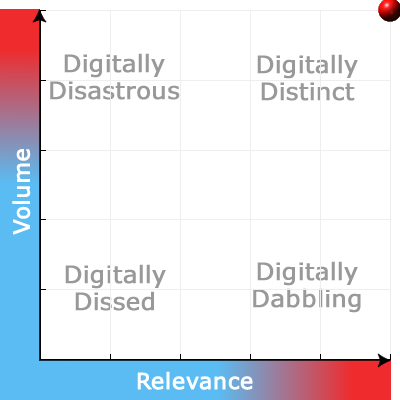
Sounds pretty scary, but for sure real.  I have recently come across this OnlineID Calculator tool from Reach Communications Consulting.  By answering a few simple and quick questions through this free online tool, you will able to discover whether your online identity turns out to be digitally distinct, disastrous, dabbling, or dissed.

After getting my results, I am now ready to start making plans to continue building my brand in the new year!

Read Full Post »

I applaud what the territory’s Ombudsman Alan Lai Lin said during a press conference over the Water Supplies Department’s mixed-up meter readings screw-ups over the last 20 years.  Apparently over 100 cases of water-meter mix-ups are reported each year.  A complainant received water bills up to HK$900 even though her flat was vacant for 6 months.   The Ombudsman pointed out that although the installation of water meters has been contracted out in recent years, greater supervision is needed by the Department.  “Even though the work is contracted out, the responsibility should not be contracted out.”, said Mr. Lai.

This couldn’t be more spot on.  Whenever I lead contract negotiations on outsourcing deals, mediate issues and performance complaints with incumbent outsourced providers, or conduct qualification analysis over whether or not to outsource with senior business partners, I always see people with the wrong understanding over the objectives of outsourcing, or contracting out in the above scenario.  Aside from obvious savings on costs and headcount, many corporations look at moving part of their processes offshore so as to focus on core elements of their businesses.  This has been gaining traction over the last 10 to 15 years.  In fact, no one would be surprised to see that a lot of the customer facing functions are being contracted out.  Call handling, customer services, direct selling, payroll, HR, and installation like what we see above for water-meters.  Oh yes, procurement can be outsourced as well.

Many clients think that the worst is over once the decision is made and endorsed by management.  They believe that they can then sit comfortably and bark orders at the outsourced providers and transferring all business targets onwards.  These are clearly the most irresponsible clients.  Experienced leaders understand how much more difficult it is to manage outsourced providers, much more so than running their own team of staff in-house.   Businesses need to undergo what we call risk analysis.  They need to brainstorm and  list out everything that could go wrong, and then place relative likelihood and precautionary as well as handling guidelines for each scenario.    They need to assign specific resource (in-house) who is tasked with managing the outsourced provider on a daily basis.  Sometimes this resource needs to work on-site with the provider.  Accountability has to be set right from the start with clear distinctions.   I have seen too many clients who think that the outsourced providers are the only party shouldering responsibilities.  In fact they themselves are equally liable to provide the necessary direction, management and rectification whenever they see problems ahead.  Laying the blame on the outsourced provider only proves how incompetent the client really is.  To me, they share the biggest part of the blame.

Most outsourced relationships fail because of issues like this.  There is nothing wrong about the concept.  Technical competencies maybe, but it could easily be rectified by trainings and investment.  I see time and time again that my clients fail to grasp the right techniques, processes and mentality to manage the providers.  Whenever catastrophes appear like the water bill foul-ups cases above, they pass on the blame and ask for more money from the top!


Read Full Post »

Swipe Baby, Swipe!

Trying to take advantage of all the bargains and promotional offers in town is not an easy task.  It takes efforts to do the necessary homework to hopefully save a few bucks.  Lately I have been following closely to all the promotional cash back deals offered by virtually every other credit card issuing bank in the city, and I have to admit it is much harder than it looks.

A couple of years ago cash back promotions were less common.  The banks were more focused on acquisitions and to grow their card holder base as quickly as possible.  Most deals were focused on flat screen TV, Sony Playstation, or the latest mobile phone model as welcome gifts.  It seems that most cardholders nowadays own enough cards that the acquisition base is getting smaller.  The issuers need to now focus on initiating spend value on cards.  If we don’t swipe, they will not make merchant fees. 

So you now have all the major supermarkets, electronics stores, department stores and pharmacies linked up with different card issuers, offering cash back to induce spend on cards.  The catch is that they make it so complicated that it requires diligence, preparation and photographic memory to figure all this out.

1. Get the mailings

First you need to know what deals there are available for your card(s).  Some issuers send you direct mailing, but usually by the time you receive them, a few days have passed since the limited promotional period begins.  For those issuers who have a huge card base, they advertise on newspapers instead since direct mailings are relatively more expensive.  The digitally inclined may get to hear about the offers via e-mail. 

2. Remember the promotional period

Each offer is valid only through limited time.  Most concentrate around the holiday season when we do most of our purchases.  Some however limit the offers only from Fridays to Sundays. 

3. Know the qualification spending threshold

Each offer requires a minimum spending amount per transaction in order to qualify for the cash back.  It’s not entirely out of reach, but it means you should accumulate your purchases to a particular day during the weekend to meet the threshold.

4. Register

I don’t know why they cannot let everyone just enjoy the offer provided the above criteria is met.  No no, they need you to register for it by dialling their hotline, or online via their website.  If you don’t, you have no cash back.

5. Figure out how much cash back you are entitled

They make it so tempting on the flyers that your cash back entitlement can go as high as 50% of your purchase amount.   So when you register, you will get into a draw and realize how much percentage cash back you will get for the entire promotional period.  You register once and the same percentage stays on throughout the whole period.  Of course, I presume most cardholders get the lowest cash back entitlement, which is normally around 8%.

6. Understand the maximum cash back you can get

Even if you are satisfied with the 8% cash back (a penny is a penny), they also tell you what maximum cash back amount you can ever get within the period.  So no point of making any advance purchase if you have already met your rebate ceiling.

7. When will I see the cash?

Finally, you will be pleased to find out the rebate will be credited back into your account 6 months after the promotional period ends.  Remember to check your account, and hopefully you wouldn’t have forgotten about the whole thing or terminated your card for whatever reason.

Alright, multiply the above steps by 3 or 4 times for the total participating issuers and I guarantee you will be as lost as I am.  Now when I need to make a purchase, I have lost count as to what else I should buy, which card I should use, what day today is, and most likely, why I am seduced to spend more by the illusionary savings programs. 

Bravo on the marketers!

Read Full Post »

Civility & The City

I admit I walk fast, and I mean really fast.  I seldom wander around aimlessly on the streets of crowded and densely populated Hong Kong, and walking in the city for me is a mission to get from point A to point B.  Yes I know it sounds robotic and industrious, but to me there’s not much fun rubbing shoulders with thousands of strangers, be stepped on by people behind me, or bumping into people who have no intention looking forward when they walk.  I am rather impatient with people like that and hence walking on the streets for me is like steering myself in a video game: sliding through as many pedestrians as possible while picking the shortest, more direct routes.

It’s exactly the opposite when I am in the countryside.  I want to soak up all the fresh air, scenery and the hard-earned quietness.  I really could sit down on the grass and let my mind ponders, perhaps into absolutely nothing.

Back to the city.  To add to all the craziness, there are plenty of product and restaurant promoters standing in the middle of the most crowded streets holding up large signboards with one hand, and handing out pamphlets that will give you nasty paper cuts if you don’t have your arms and fists protected.   These days, there are also plenty of street donation booths popping up everywhere, usually coupled with supposedly volunteers holding out donation boxes approaching each and every person passing by.  They would sometimes stand guard at all the zebra crossings so that you have nowhere to run whiling waiting to cross the roads.  There are simply obstacles everywhere.

Yes I do have a thing with all the street side donation booths.  Even if you don’t count the possible scams out there, I still do not give out donations on the streets.  When I donate to charities, I will make an informed choice based on reasearch I have done both on the mission as well as to the handling agencies.  I respect those who donate on the streets, but it is just not my thing.  I seriously think it is an invasion of my privacy by anyone trying to stop me for whatever agenda they have.  It is downright harassment.   I will still smile at the volunteers but at the same time shaking my head signalling my unwillingness to slow down.

I don’t mind being approached by innocent tourists asking for directions, because I know how helpless I can get if I am lost in a foreign land.  I get approached in all the weirdest places you can think of, and virtually in every foreign city that I have been.  I don’t know why even when I look nothing like the locals.  Perhaps it’s my hectic pace that convinces people as if I know where I am going?  Though one thing I particularly have a problem with is when they try to grab my attention by patting or even pinching me.  Body contact by strangers creeps me out.  I think it is downright rude and I usually would simply stare right back at them.   What happens with civility these days?

Any don’t get me started on civility.  Countless times have I been stuck in the elevator because people jump right in without waiting for others to get out first.  What’s the rush of 10 seconds?  Same thing with getting on and off the subway and this is witnessed all around the world.   You can see people eating and drinking on the subway and buses all the time.  People are leaning their entire body on railings so that they can free their hands holding up newspapers to read, leaving zero room for others to hold on.  People screaming at the top of their lungs into their mobile phones.   When I see parents praising their kids who literally run pass the line and jump into subway carts grabbing the 4 empty seats for the whole family, I lose all hope in mankind.

I have friends who tell me that I need to contain my rage by avoiding all forms of public transportation and crowded public areas.  They told me driving would be my best alternative.  But seriously, wouldn’t I do a lot more damage with a high-speed motor vehicle?  Who says this city’s driving manners are anything more civilized?

Read Full Post »

Sometimes greed is not with the procurement professionals themselves, but with their business counterparts under the same roof.  Our other lines of businesses are getting desperate over meeting their sales targets, and before long, they are eyeing my supplier relationships.  They demand to see my supplier list.  They accuse procurement for not doing their jobs for them.  They want to take advantage of the suppliers’ vulnerability by pressuring them to buy from us.  I don’t think our suppliers are dumb, but it is my duty to set some records straight and to protect my relationships the best way I can think of.  I made my feelings of the topic clear in Part One, and it’s about time I share my two cents worth on what’s the best way forward.

Setting the record straight

In case there are people who start throwing the patriot card my way, I start off by stating that I am all for supporting the revenue targets of all businesses of the company, and I am more than happy to provide relevant assistance to all, but only in an organized manner in view of the limited resources I have and within my team.  In other words, I can’t handle frequent ad hoc requests from just about anyone.

Protecting the company’s best interests

Our supplier list is a critical asset of the company and it makes us what we are today.  We treat all supplier relationships very seriously and in fact we are the only department/function entrusted by the company to maintain this list.  We should not and will not share this list with other internal and external bodies solely for the basis of sales solicitation.  Possible misuse of this list may include:

1) suppliers getting confused over multiple decision makers of the company and hereby jeopardize their confidence of their contractual relationships with us;

2) individuals mistakenly sharing the list with our competitors or other suppliers hence leaking vital proprietary information that will adversely impact the company many folds over the potential sales opportunities;

3) suppliers having the wrong impression that they are forced to buy from us before they can be qualified for renewal or future business;

4) suppliers making accusations at the company that they are penalized for not buying enough from us versus their competitors;

5) suppliers using their buying power to leverage their negotiation power on us, thus demanding higher selling prices.  User departments may fear that their prices are being compromised just because they have been subsidizing other departments who are actively pursuing sales opportunities with the supplier.

Laying the ground rules

How should we then proceed? 

1) Procurement should be the mediating party since we have been trained to balance differing requirements, priorities and needs while aiming for maximum benefits of the company as a whole.  We have been impartial in the past and we shall continue to do so. 

2) Sales departments need to share with us their revenue targets, major promotional plans of any, target sectors, top 30 targets of the year, respective target sums, etc., with procurement assuring confidentiality.

3) Procurement can then work out a plan, prioritizing with the sales teams, of each target’s feasibility and next steps.

4) Sales departments should also develop a standard template for procurement to send out mailings to the targeted accounts, identifying the contact points of the businesses and stating whatever discounts or perks they can enjoy being existing suppliers of the company.

5) Procurement will remain involved in the background as in most cases the relationships with the targets lie with us rather than with the sales departments.

6) Procurement will be kept informed by the sales departments of the status, success and failure of the attack plan, so that we can log down our value-add to the sales departments and to the company.  There shall be management recognition of everyone involved over the entire collaborative process.

Needless to say, before committing to the above, each procurement organization needs to assess how much spare resource they have supporting this effort.  It does take time and diligence.  I have gotten quite substantial affirmations of the above plan in different organizations, as sales teams usually are impressed as to how the whole matter is thought through and professionally executed.  It also helps to set accountabilities for everyone involved, and not only for procurement.

Of course, to be honest, all I really wanted was to get them off our back!

Read Full Post »

The use of electronic auctions in procurement is not unpopular these days, though it is definitely more common in the direct materials area.  A few years ago my job was to promote the use of e-auctions and to illustrate how it could become one of the valuable tools for procurement professionals in Asia.  E-auctions in procurement is like the reverse of how we use eBay or any online shopping auction portals as regular consumers.  When we shop on eBay, we are facing a few days or even weeks of deadline to bid for the merchandise we love.  We have to check back often to make sure whether we are still in the lead or if not, keep bidding with a higher offer.  We now make use of the same theory and technology to bring all suppliers together (virtually) to compete for the buyer’s business volumes.  The only difference is that a lower bid will be more competitive, meaning the buyers will award business to the supplier offering the lowest price.   It’s that simple.

Some procurement clients are against e-sourcing.  They think that the suppliers are not ready.  They think that it will send a wrong message to the community saying they only care about price and nothing else.  They are worried about their relationships with suppliers being impacted.  They are also concerned over technological instability, as well as online integrity issues.  These are all valid concerns, but I would say 80% of these concerns are addressable by the procurement clients and executives themselves. These concerns are nothing unlike those already exist with conventional sourcing methods like RFPs, tenders, or face-to-face negotiations.

The technical aspects are easy to be picked up and training on that part usually takes less than a day, but it’s the game rules, pricing setup, supplier pre-qualification and online integrity that will need to be addressed and covered in most detail.  When I teach such topics, I always bring it back to the very basics when I am asked with the above questions.  What would you do if you have these challenges with conventional sourcing?  It’s exactly the same tactics and preparations that we need to do in e-sourcing.  It’s only the negotiation platform that is changed; the sourcing philosophy isn’t.

Sometimes I really have to give it to the Chinese.  We Chinese are very fast learners in general, and we pick up new technologies in a snap.  When I teach in mainland China, I am constantly challenged to keep my local clients fully engaged and interested.  They get the benefits of e-sourcing instantly.  It’s quick.  It leaves the negotiation from between each supplier and the buyer to between suppliers themselves.  It shows their bosses what the most updated market price is.   Although there are clearly constraints of e-sourcing, most local clients I introduced are truly amazed and excited over the 30-minute or so online bidding event.  The buyers clapped, pulled in their colleagues and bosses, and some even toasted with champagne. 

What I am afraid of are the REALLY smart adopters.  One Chinese client asked me to teach them how to register as a supplier so that they could join the event to “observe”.  I wasn’t born yesterday, and at times like this, I had to stop them right away so as to make sure they were only joking and not thinking of intervening an event unethically.  I felt that they understood it, but from the corner of my eye, I swore I could see a few of them plotting the possibility silently. 

I am all for innovation, but don’t step over the line, guys.


Read Full Post »

« Newer Posts - Older Posts »